
Exercise physiology in Five Dock and Gladesville, NDIS funded
Accredited Exercise Physiologists building long term capacity for NDIS participants, through exercise that is prescribed, measured and progressed.
An Accredited Exercise Physiologist prescribes exercise as a clinical intervention. For NDIS participants that usually means the long game: building strength, endurance and function that hold up over months, and keeping them once they are there.
Our EPs work at both clinics. Edmond Ma at Gladesville is dual qualified as a physiotherapist and an Accredited Exercise Physiologist, which is useful where a presentation sits across both.
Where exercise physiology fits an NDIS plan
Exercise physiology tends to be the right call where the goal is capacity over time rather than recovery from a single injury.
Neurological conditions
Stroke, cerebral palsy, multiple sclerosis, Parkinson's and spinal cord injury. Programmes target strength, balance, walking and the endurance to keep doing what matters across a whole day.
Chronic conditions
Cardiovascular, respiratory and metabolic conditions, where supervised exercise is part of managing the condition rather than an extra on top of it.
Adaptive sport performance
Conditioning for participants competing in adaptive sport, working alongside the S&C and physiotherapy side of the practice.
Deconditioning and fatigue
Participants whose capacity has dropped after a long admission, a period of inactivity or a change in their condition, where pacing matters as much as loading.
Prescribed, measured, adjusted
The first appointment is an assessment. We establish what you can currently do, what is limiting it and what you want to be able to do, then write a programme against that. The programme is a document with loads and progressions in it, not a set of instructions given verbally and forgotten by the following week.
Measurement
Where it is useful we test objectively rather than by impression. At Five Dock that includes force plate testing for strength and asymmetry. Re-testing at intervals is what tells us whether the programme is working, and it gives you something concrete to take to a plan review.
Where sessions happen
- One to one in the gym at Five Dock or Gladesville.
- Home programmes written to be done between sessions, with the detail you need to do them properly.
- Alongside your physiotherapy where both are appropriate, rather than duplicating it.
Medicare as well as NDIS
Some participants are eligible for exercise physiology under a Medicare chronic condition management plan as well as through the NDIS. If that applies to you, your GP can arrange it, and we can help you work out which funding to use for what.
Neurological rehab at Five Dock
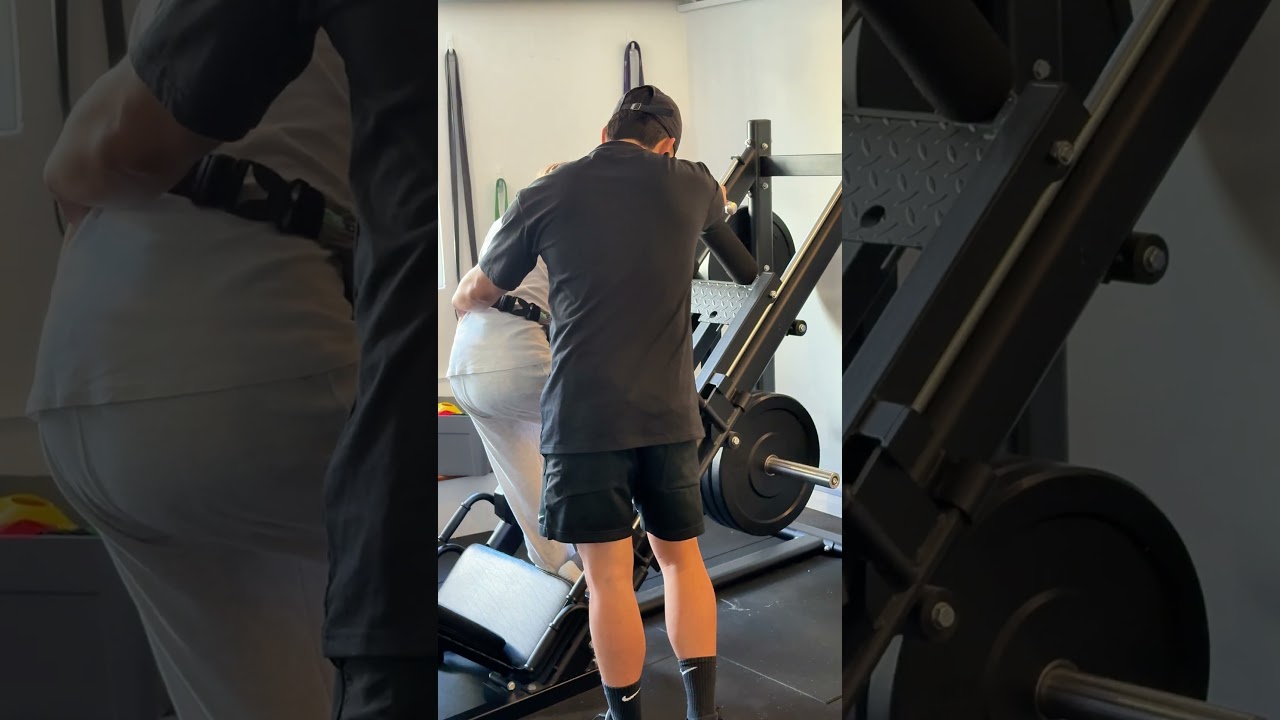
Exercise physiology for a neurological condition is strength, balance and the endurance to keep going all day. This is what a session looks like.
Questions we get asked
What is the difference between exercise physiology and physiotherapy?
Which NDIS support category does exercise physiology come from?
Do I need a referral for NDIS exercise physiology?
Talk to an exercise physiologist
Book a free 15 minute call at Five Dock or Gladesville and we will tell you whether exercise physiology is the right starting point.
Plan managed and self managed welcome · No referral needed · Five Dock & Gladesville